
Our surgeons regularly share valuable medical information, tips, and the latest advancements in surgical care.

Hernias are a painful condition caused when an internal organ pushes through the muscles or tissues holding it in place. This can often cause a noticeable bump or lump to form around the affected region. A common example is when the intestines push through the abdominal muscles in your body. Hernias often occur around the abdominal or groin region and are most visible while standing.
In a few cases, if a hernia is small enough and doesn’t cause any pain or issues, you might be able to postpone surgery. However, most hernias do get larger over time and will most likely cause more serious complications if surgery is not performed soon.
One of the most serious hernia-related complications is referred to as strangulation. Strangulations occur when the bulging organ in question is being cut off by muscle tissue, causing the tissue to swell up and possibly die. Once this happens your symptoms will begin to intensify causing:
If any of these complications occur, it might be time to perform surgical treatment as a strangulated hernia that is left untreated can rupture.
During surgery, the tissue that is leaking out is placed back into its proper place, and the muscle tissue that is damaged is stitched back together. If the muscle in question is too weak to support the organs it may be reinforced with mesh, strengthening the placement of the organs.
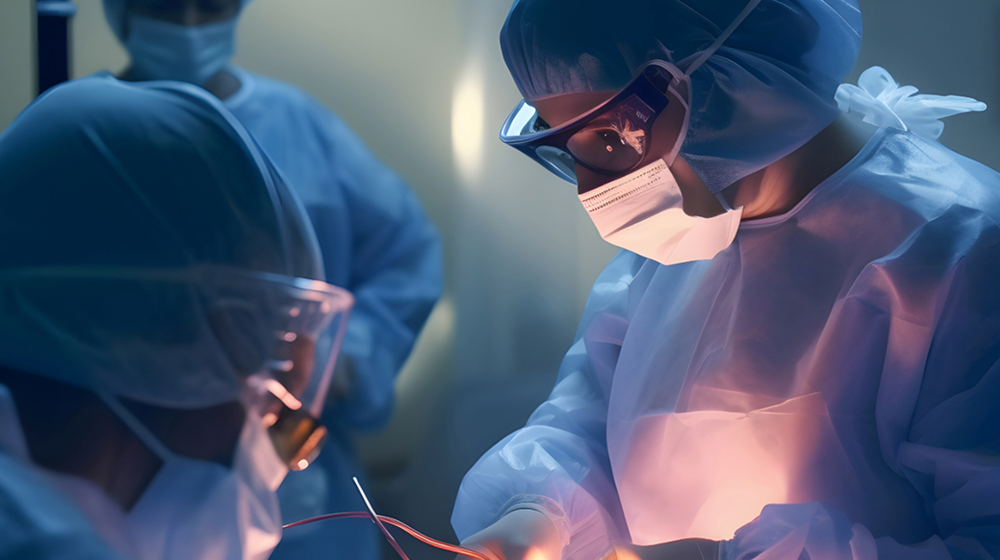
The great news is that almost all hernia surgeries can be performed using minimally invasive laparoscopic technology. This type of surgery allows surgeons to use robotic interfaces while performing surgery, drastically reducing the incision point needed to perform surgery, and ensuring that the surgery is performed with pinpoint accuracy.
Hernias can become painful or worse if they are not treated. If you believe that you are suffering from a hernia, now may be the time to speak with a medical professional to receive a consultation on a treatment plan for you.
This article is provided by Surgery Group LA, a team of board-certified surgeons at the Cedars-Sinai Medical Office Towers, 8635 W 3rd St, Suite 880W, Los Angeles, CA 90048. Our specialists care for patients from throughout Los Angeles, Beverly Hills, West Hollywood, and surrounding communities. To schedule a consultation or second opinion, call (310) 861-7493.
Colorectal SurgeryHernia SurgeryThyroid & ParathyroidGeneral SurgerySurgical OncologyBreast Cancer CenterRobotic SurgerySecond Opinion
Related articles from the same topic